
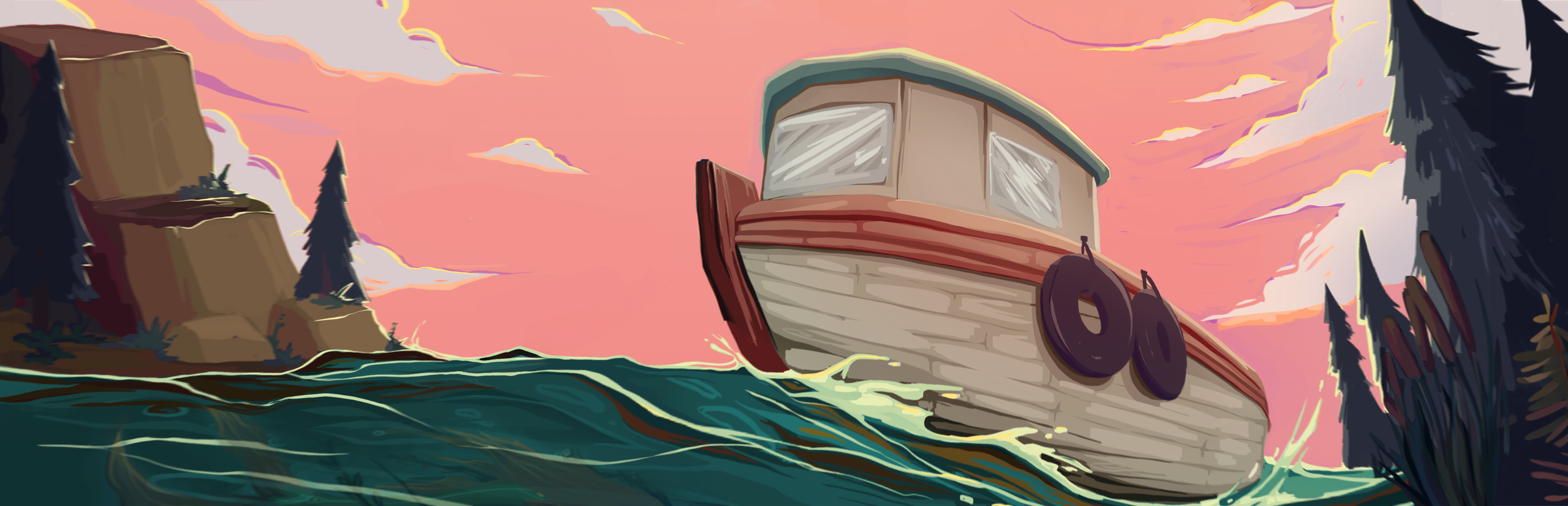
Lake Minnewaska
2024
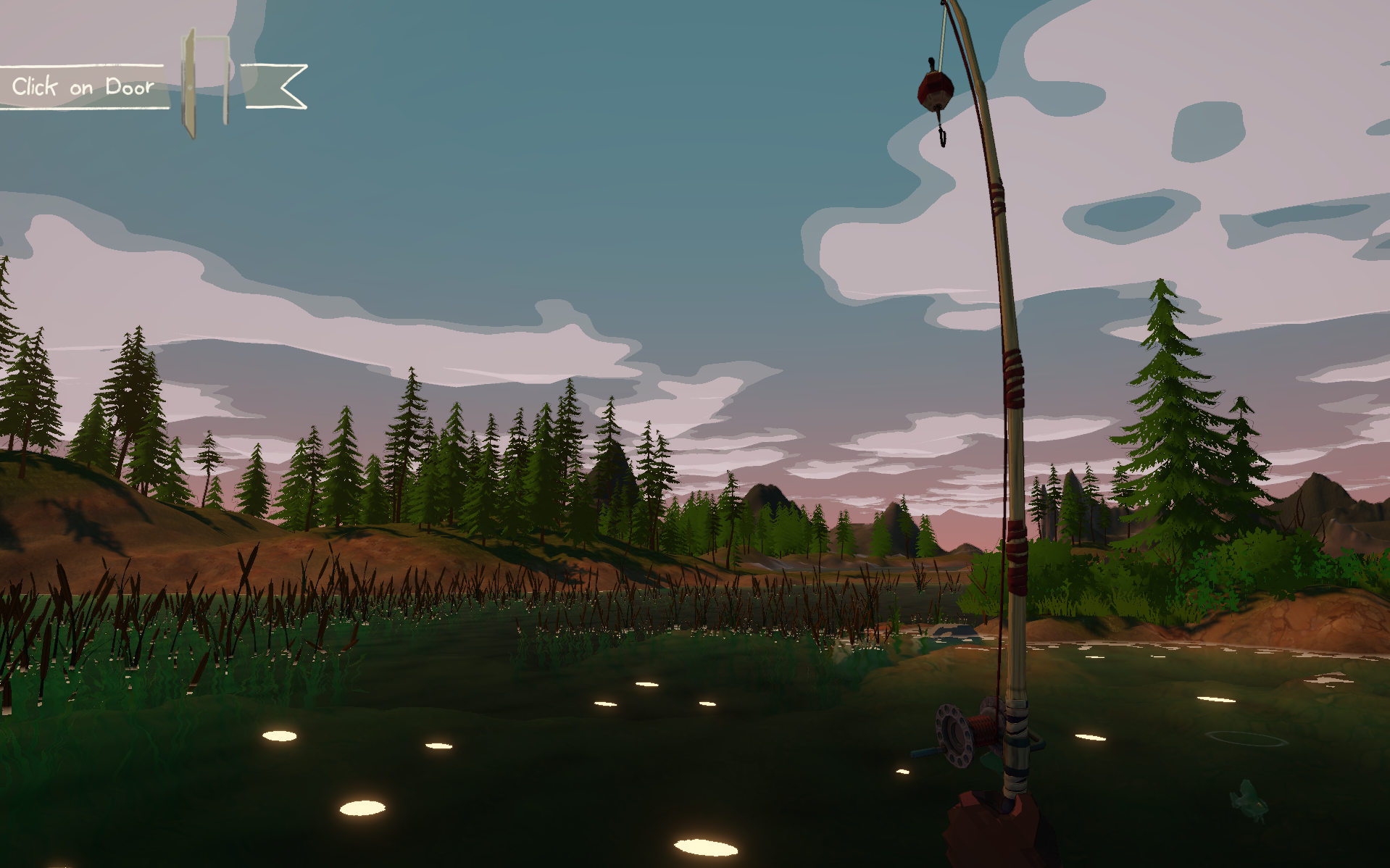
A narrative fishing game where players can explore the secrets of Lake Minnewaska while guiding Sosa on his journey to become a better father. Completed as a capstone project for USC Games Project 2023-2024 academic school year and officially shipped to Steam on June 1, 2024.
Our Goal
“Lake Minnewaska” is an exploration of grief and the various ways to portray them through narrative, environment, and gameplay.
Highlights
A simple rundown of what I worked on in this project.
Role: Technical Designer
Engine: Unity
Team Size: 35
Timeframe: 1 Year
-
Collaborated with art and engineering teams to reach design goals while managing and assiting fellow designer.
-
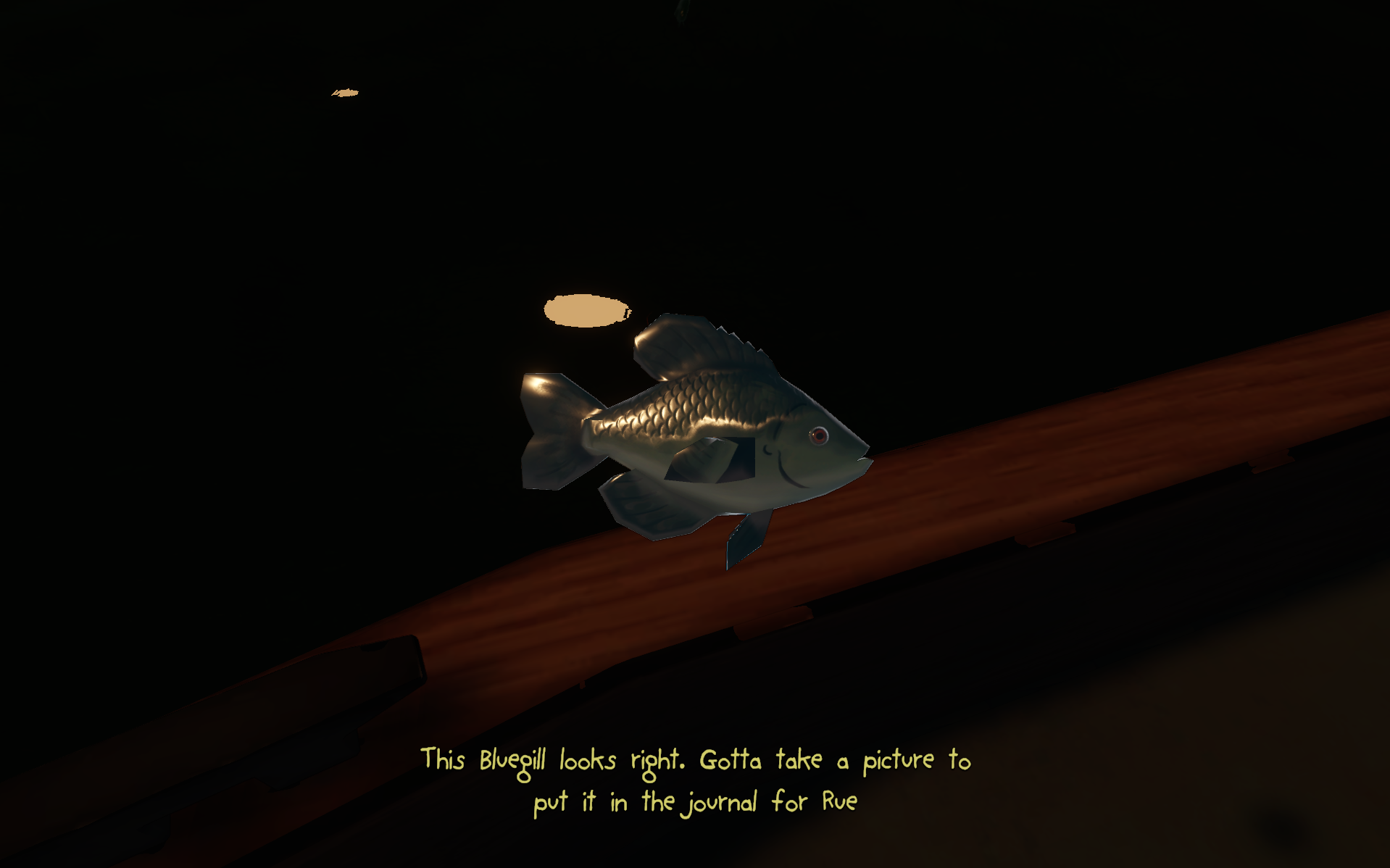
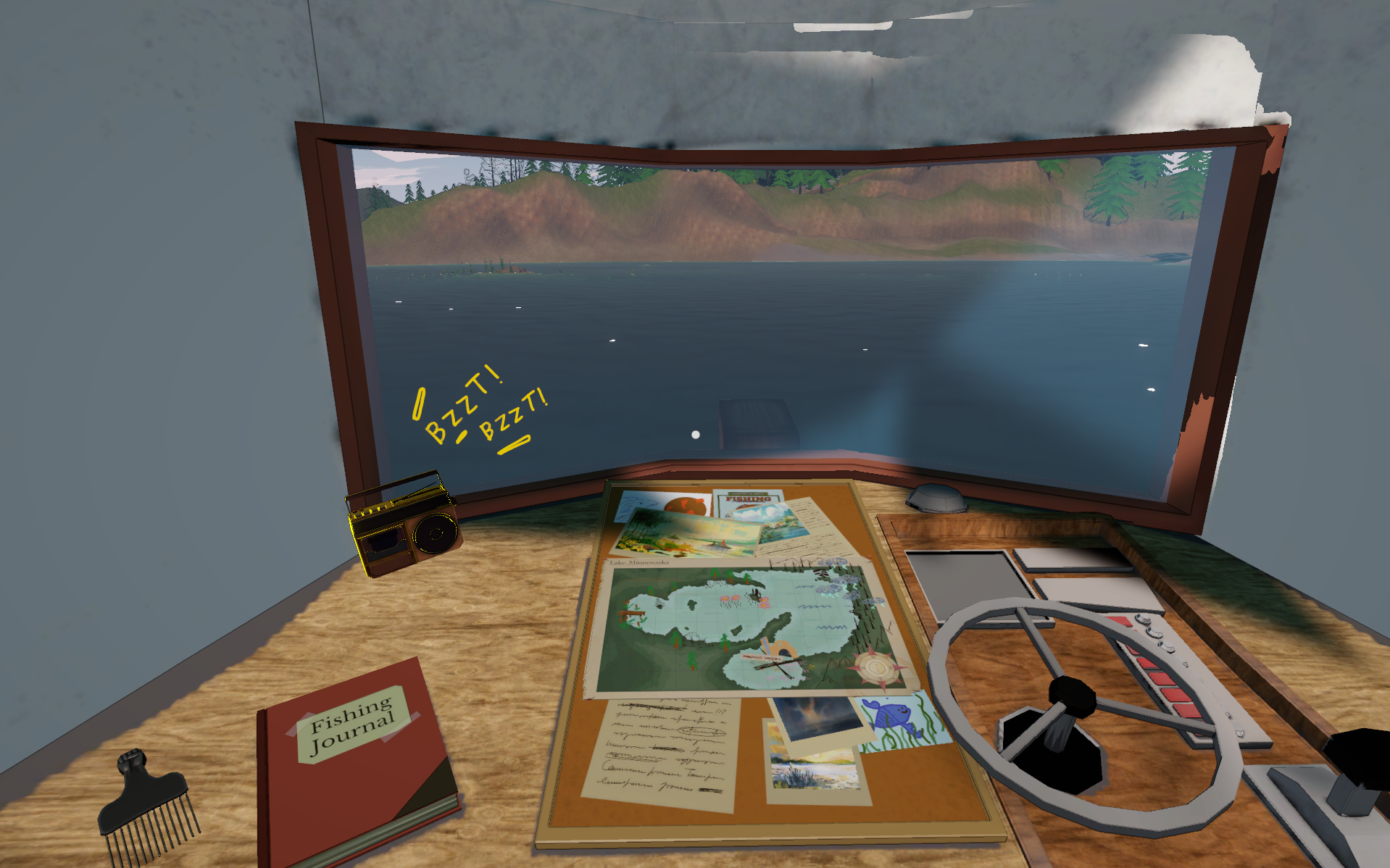
Designed and polished game systems, including journal, fishing, and map.
-
Collaborated with narrative designers to rewrite script and finalize narrative flow while making sure it connected to game mechanics and environment.
-
Refined the boat’s layout and lake zones’ level design to reinforce gameplay and narrative through the environment.
-
Prototyped various mechanics in Unity (C#) and iterated on them based on feedback.
Trailer



Challenges
Reeling in the Narrative
One of our first challenges was connecting our core fishing mechanic directly to the narrative. So, we broke down it down into some core questions that needed answers. Why should players fish in the first place? How does catching a fish advance the story? What makes this action meaningful to the narrative?
At first, we explored ways for the fishing mechanic itself to carry some narrative weight. For example, overfishing could tie into an environmental message, but our story focused on something more personal: a father navigating through his grief. We needed something that felt more intimate and could connect our characters directly to the game progression. How could fishing serve as a meaningful bridge between our gameplay and narrative?
After many discussions, we took another step back. Why fishing? That’s when we were able to connect the main mechanic with Rue and Sosa. It became a family tradition and pastime shared between father and daughter. That was our core.
Now we could focus as to why Sosa was fishing now? With our core being grief, it was natural to connect Sosa’s actions to his past with Rue. By fishing, he could relive his memories with his daughter one last time.
This emotional base was the connection between our mechanics and story. However, our next challenge quickly became how to slowly reveal the narrative as the player progressed.
Catching Stories, One Entry at a Time
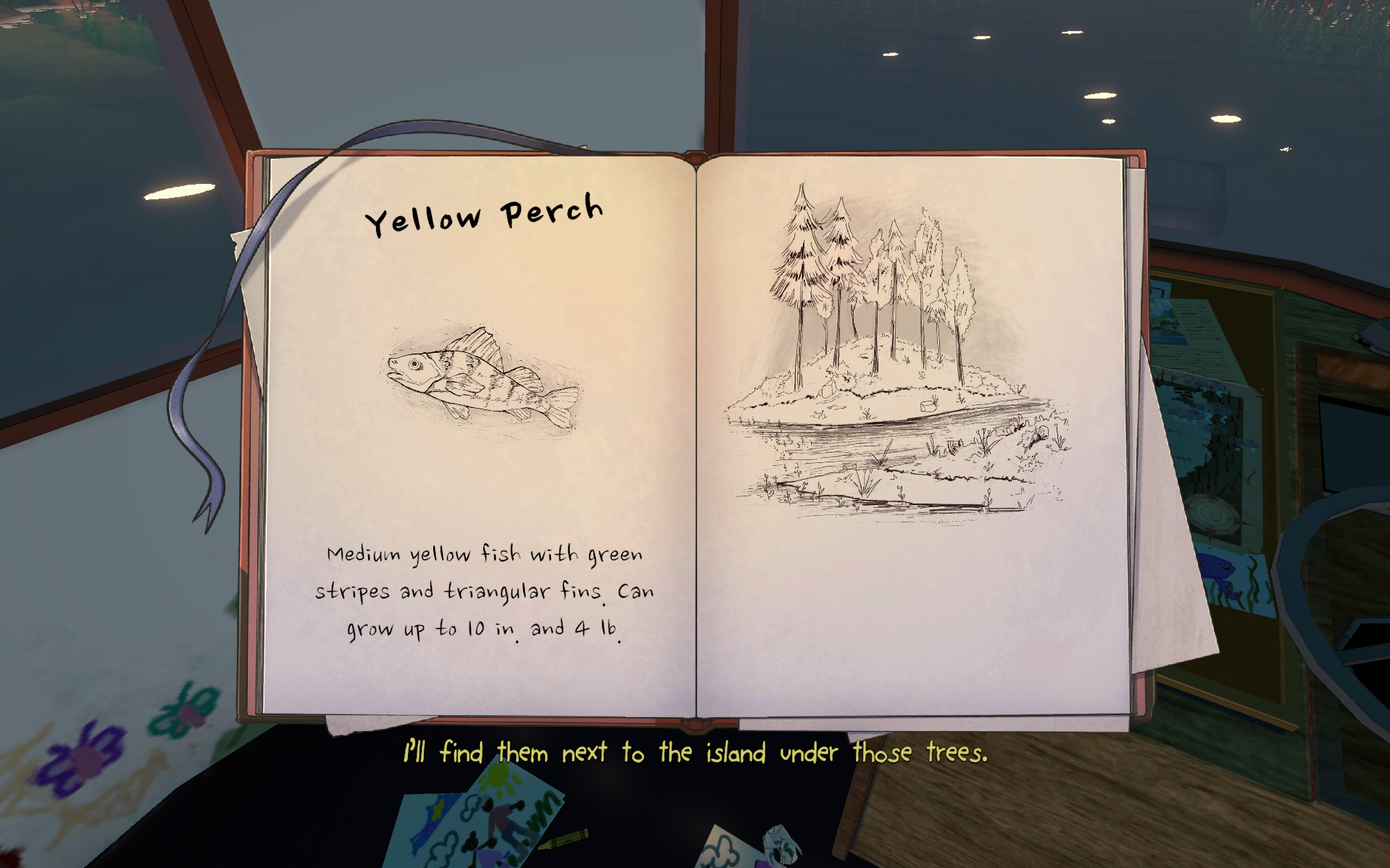
If Sosa is reflecting on memories with his daughter, how do we communicate this to players in a way that sticks and feels natural? Dialogue alone was not enough since spoken lines were too easy to forget. We needed something persistent that players could return to. That’s where the journal came in.
Instead of a simple progress tracker, the journal became a space for lore. Each fish had its own narrative entry that unlocked once caught. This also gave Sosa a moment to comment on the revealed entries which reinforced key narrative beats.
The journal also became a place to foreshadow the narrative reveal of Rue’s death. Sosa is completing Rue’s journal. At first, it might seem strange to the player that he is working through this in place of his daughter, but that curiosity is what strengthens the reveal later on.
With this, the journal was a quest tracker that not only revealed new memories but was part of the narrative itself. It gave players something to engage with beyond the act of fishing while presenting the story in multiple ways to ensure it stuck.

Important Takeaways
Define Your Game and Audience
A clear game vision is everything. Every mechanic should align with your core message. If not, you risk unclear design choices and distracting from the intended experience. Also, knowing your audience is essential. Who are you designing for? How will they engage with your game? If your choices don’t serve your intended players, the project can very quickly lose focus and become overly ambitious.
Don’t Be Afraid to Cut or Pivot
Throughout development, we explored a huge variety of gameplay ideas and systems. We brainstormed and prototyped many mechanics before reaching our final choice. As time went on, we had to step back and begin to cut anything that didn’t align with our goals or fit into our existing systems. We learned quickly that being decisive about when to cut or pivot is vital when dealing with tight deadlines.
Communication is Everything
Keeping an up-to-date design document is critical, especially early-on. That way everyone can stay aligned despite rapid changes. As the head designer, constant communication across disciplines became even more important as we approached our deadline. Regular check-ins, answering questions, and making sure everyone was on the same page helped the team work efficiently and avoid last-minute surprises.
Understand Your Infrastructure
When making changes late in production, it’s important to understand exactly what your existing systems can handle. Designing something that requires major engineering work only a couple months before launch isn’t realistic. Instead, being creative within the constraints of your systems and finding manageable solutions that limit work while fixing issues need to be the focus.